
We’ve known how to pull metals out of water for decades. So when people ask why resource recovery still feels stuck, I tell them the recovery itself was never the hard part. The hard part is making a waste stream recoverable in the first place, and making the economics work once it is.
Most waste-to-value conversations start with sustainability. In practice, adoption almost never starts there. It starts somewhere less glamorous: a compliance issue, a treatment bottleneck, an operator stretched thin by a stream the system was never built to handle. The streams with the most recoverable value are often the same ones a facility struggles most to manage. That tension is the real story, and it’s why we’re bullish on recovery for a reason most people don’t lead with.
Waste-to-value has to solve a real facility problem
A stream can hold real recoverable value and still be something a facility would rather avoid. It may be hard to treat, inconsistent in composition, or expensive to manage with the system already in place. The value inside the water doesn’t matter much if the site can’t get to it reliably.
So the practical case for recovery rarely starts with the material. It starts with the problem. The facility isn’t asking whether recovery sounds good in theory. It’s asking whether a better treatment path can take pressure off a stream that’s already causing trouble. When the answer is yes, recovery stops being a nice idea and becomes one more reason to move forward on an improvement the facility already needed.
Manufacturers aren’t trying to become commodity traders
This is where a lot of recovery pitches lose people. Most manufacturers aren’t built to turn recovered materials into a revenue stream, even when the material has real value. They’re not in the business of selling nickel, lithium, or sulfuric acid, and they’re not looking to start.
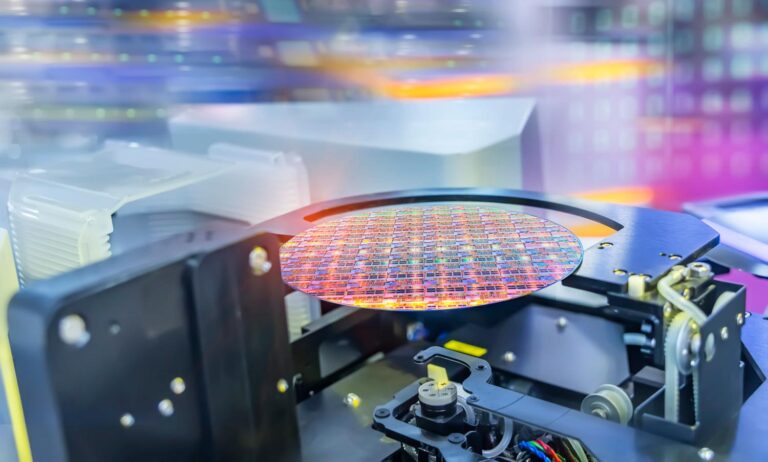
What changes the conversation is framing recovery against a problem they already own. In a semiconductor fab, the copper in wastewater matters because it helps offset the cost of treating a stream the site has to manage anyway. In battery manufacturing, lithium in a difficult stream can do the same. The recovered material doesn’t replace the core business of making products reliably. It helps pay for the wastewater improvement that keeps that business running.
Valuable material isn’t the same as a viable business case
Even then, I’d caution against assuming value in the water equals a business case. There’s a real gap between the two.
Market prices move, sometimes before a project is even approved. Purity requirements can be just as decisive, because recovered material only has value if someone can actually use it, buy it, or return it to a process. And even when the chemistry works, the site still needs a realistic way to handle the material once it leaves the treatment system. A lot of recovery conversations get complicated right here. The value may be real, but the facility still has to prove it can produce that material at a useful quality and manage it in a way that fits the operation. Without that path, the value stays theoretical.
Where the economics actually change
So why are we still bullish? Because when recovery is tied to an infrastructure upgrade a facility already needs, the economics change. Not every difficult stream becomes a profit center, and few projects will ever justify themselves on recovered material alone. But when recovered value helps fund a wastewater improvement that’s already on the table, a painful cost center starts to look like a strategic upgrade.
That’s the part that gets me. Recovery done this way can improve uptime, compliance, and resilience at the same time, and it keeps critical materials in circulation and closer to home instead of treating them as disposal problems. The hidden value in a difficult stream won’t replace the operational reason to act. Facilities still need reliable treatment, and they still need systems that keep water from limiting the business. But when recovered value helps pay for getting there, the business case gets a lot stronger.
That’s the real opportunity. Not recovery for recovery’s sake, but a smarter way to solve the wastewater problems industrial facilities already live with every day.
Stay connected
Join our mailing list to stay updated on future opportunities and company news.
Resources
Explore Membrion resources to gain insights on solving complex water challenges.
Treating concentrated copper wastewater without expanding the footprint
Semiconductor copper wastewater from electrodeposition tools can arrive at high…When everything is possible, what is valuable?
For decades it’s been technically possible to treat almost any…Overcoming silica constraints in high-recovery water treatment
Silica often sets the recovery ceiling in reverse osmosis systems…