
Overcoming silica constraints in high-recovery water treatment
Silica often sets the recovery ceiling in reverse osmosis systems. See how ECD decouples recovery from silica scaling and lifts overall plant recovery into the 90s, 96 percent in one application.
Get the white paper
Get the full technical white paper, including the silica chemistry, the role of each scaling metal, the ECD process configurations for treating RO brine, and a worked example for calculating silica steady state.
Key takeaways
- In many reverse osmosis (RO) systems, silica, not salinity, hardness, or organics, sets the recovery ceiling.
- When silica is present, conventional RO is often limited to somewhere between 35 and 70 percent recovery.
- Electro-ceramic desalination (ECD) separates dissolved ions by electrical charge, so neutral silica stays with the water instead of concentrating and scaling the system.
- Adding ECD to RO can raise overall plant water recovery well into the 90s, 96 percent in one case.
- Silica settles at a predictable steady state, and operators set that level by adjusting the ECD recovery rate.
Why silica limits water recovery
As facilities push toward higher recovery, lower discharge, and more reuse, silica is often the constraint conventional treatment cannot get past. In many RO systems it is silica, rather than salinity, hardness, or organics, that defines how high recovery can go. Once that limit is reached, operators are left with higher brine disposal costs, more chemical use, or scaling that shortens membrane life and threatens reliability.
Why silica is so hard to control
Silica does not behave like ordinary scale. Its chemistry changes with pH, temperature, and residence time, and it can exist as dissolved monomeric silica, polymers, colloids, or dense metal silicate scale. Near neutral pH, in the range of about 6 to 8, dissolved silica polymerizes quickly and unpredictably into deposits that conventional antiscalants do not control well. At higher pH silica becomes more soluble, but calcium and magnesium silicates then tend to form instead, which is often a more severe and more stubborn failure mode. Amorphous silica stays soluble only to roughly 120 to 150 mg/L as SiO2 below about pH 8.5, so high-recovery systems reach that limit quickly.
How ECD overcomes silica scaling
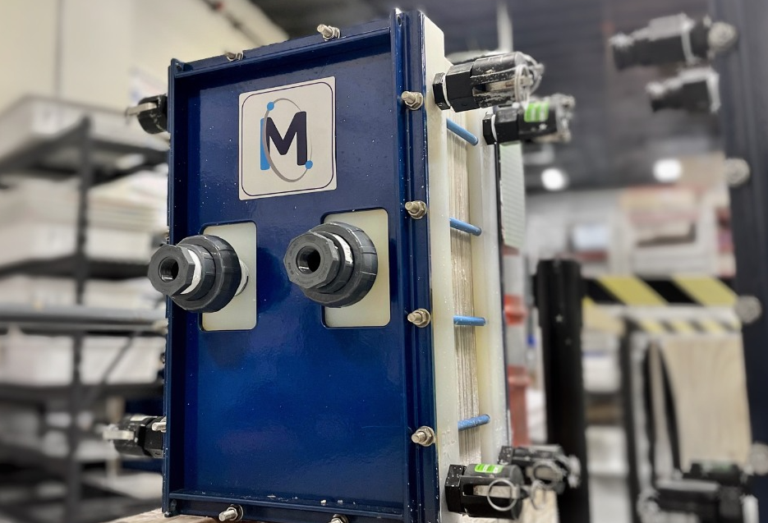
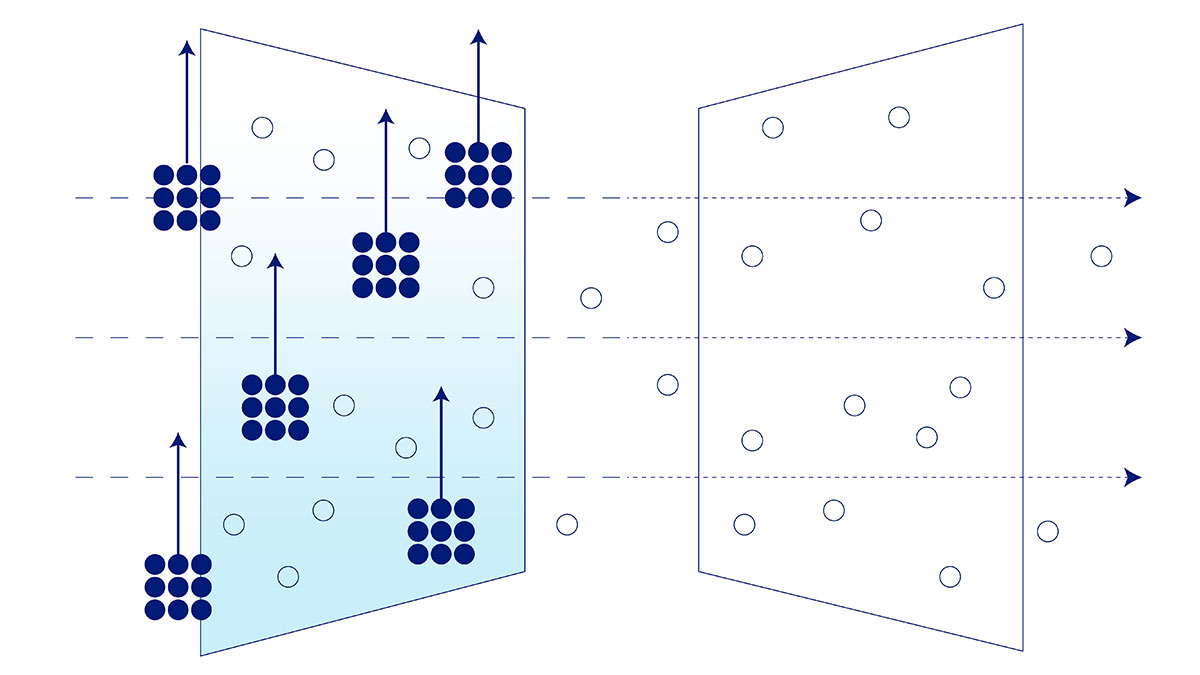
Electro-ceramic desalination works differently from pressure-driven membranes like RO. Instead of separating by molecular size or bulk concentration, it removes dissolved constituents by electrical charge. In the pH range where ECD operates, silica stays neutral and monomeric, so it does not respond to the electric field that moves ions through an ECD module. Silica follows the water rather than concentrating inside the system, which means it does not build up, polymerize, or scale the membranes. The dissolved metals that usually make silica worse, including magnesium, calcium, iron, and aluminum, do carry a charge and are removed, which lowers scaling risk further. The effect is that recovery is no longer tied to how much silica is in the water.
How high can recovery go
Applied to RO brine, ECD can run at up to 92 percent recovery or higher while returning a clean recycle stream to the RO feed. In one application, that raised overall plant water recovery 96 percent, reducing fresh water draws and brine disposal at the same time.
Because ECD does not remove silica, a fair question is whether silica simply keeps climbing as water is recycled. It does not. Silica settles at a steady state governed by mass balance and blowdown, and the ECD recovery rate acts as the knob that sets it. In one modeled case, running ECD at 90 percent recovery holds silica near 73 mg/L in the RO feed, while running it at 80 percent holds it closer to 38 mg/L. Operators can tune the recovery rate to keep silica under the system limit while still maximizing reuse.
Frequently asked questions
Why is silica a problem in reverse osmosis?
As RO recovery rises, dissolved silica concentrates and can polymerize into amorphous scale or combine with metals to form silicate deposits. These are difficult to clean and poorly controlled by standard antiscalants, so silica frequently caps how high a system can recover.
Does ECD remove silica?
No, and that is the point. ECD removes the charged ions that drive scaling while leaving neutral silica in the water. Because silica is never concentrated inside the system, it does not scale the membranes, and recovery is decoupled from silica concentration.
How much can ECD improve water recovery?
ECD can treat RO brine at up to 92 percent recovery or higher, which can raise overall plant recovery into the 90s, around 96 percent in one case, depending on the water and the configuration.
Will silica keep building up if the water is recycled?
No. Silica reaches a predictable steady state set by mass balance and the ECD recovery rate. Operators can adjust that rate to hold silica below the system limit.
Get the full technical white paper
The complete white paper goes deeper than this summary. It covers the underlying silica chemistry, the role each scaling metal plays, the ECD process configurations for treating RO brine, and a full worked example showing how to calculate silica steady state for a specific water.
Resources
Explore Membrion resources to gain insights on solving complex water challenges.
Treating concentrated copper wastewater without expanding the footprint
Semiconductor copper wastewater from electrodeposition tools can arrive at high…When everything is possible, what is valuable?
For decades it’s been technically possible to treat almost any…The real opportunity in resource recovery
Resource recovery doesn’t get adopted as a sustainability story. It…