
Food, Beverage + CPG
Water recovery is quickly becoming table stakes. But most facilities weren’t designed to achieve it.
Food, beverage and CPG facilities are being pushed to secure their water supply, yet have limited control over how much water they can recover from existing systems.
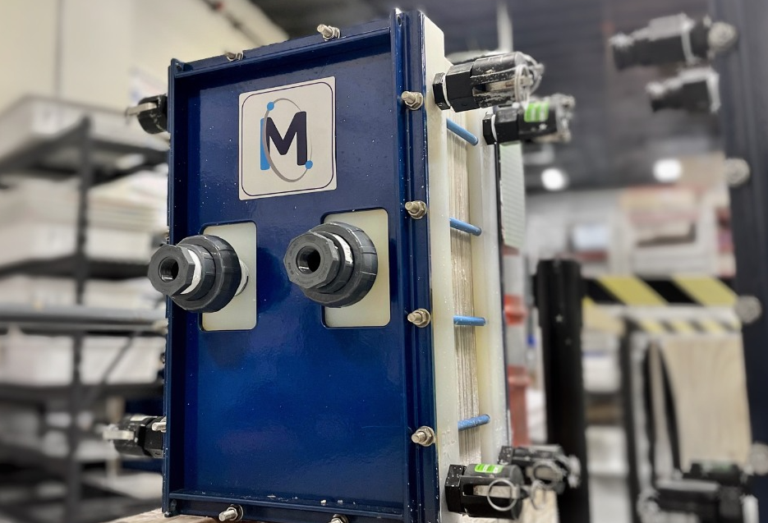
Electro-Ceramic Desalination (ECD)-powered solutions remove these constraints, enabling higher water recovery without rebuilding the plant.
Industry challenges
Food, beverage and CPG facilities are being pushed to recover more water, but most wastewater systems were never designed to support high recovery within the space and operational constraints of an existing plant.
01
Dependence on freshwater creates operational risk
Many facilities were built assuming reliable access to abundant freshwater. As water scarcity and regulatory pressures increase, dependence on external water supply can become a constraint on long-term production reliability. ECD helps facilities recover more water internally, reducing reliance on freshwater sources.
02
Water recovery is often outside your control
The amount of water a facility can realistically recover is often dictated by wastewater chemistry rather than treatment effort. Dissolved constituents such as silica, boron and other salts can limit recovery rates because they accumulate as water is recycled and disrupt conventional desalination processes. ECD selectively removes dissolved ions, allowing facilities to achieve high water recovery even when challenging contaminants are present.
03
The real cost of water goes beyond supply
Freshwater purchases are only one part of the total cost of water in food and beverage operations. Energy, treatment, pumping and discharge often represent a larger operational expense. ECD helps facilities recover more water within existing processes, reducing overall water throughput and the costs associated with treating and discharging it.
ECD Solutions for F&B and CPG
Membrion’s ECD-powered solutions show that the highest water recovery comes from removing the limits that prevent reuse, not just treating more water.


ECD technology
Most treatment systems work like coffee filters, trapping contaminants until performance declines. Electro-Ceramic Desalination works more like a kidney, continuously separating dissolved salts and metals so treatment performance becomes adaptable even in demanding wastewater conditions.
Resources
Explore Membrion resources to gain insights on solving complex water challenges.
Treating concentrated copper wastewater without expanding the footprint
Semiconductor copper wastewater from electrodeposition tools can arrive at high…When everything is possible, what is valuable?
For decades it’s been technically possible to treat almost any…The real opportunity in resource recovery
Resource recovery doesn’t get adopted as a sustainability story. It…