Water innovation only achieves a fraction of its potential
The water industry has no shortage of promising new technologies. Every year, innovators demonstrate new ways to treat difficult wastewater, recover valuable resources and improve efficiency. Many deliver impressive results through pilot programs, yet relatively few make the transition into widespread commercial use. Why is that?
It’s the central question the World Economic Forum (WEF) explores in its new report, “Making Water Innovation Work: Enabling Large-Scale Deployment.” The report examines 40 water innovators and what it takes to turn technical success into commercial implementation. I’m proud that Membrion’s work with Lam Research is featured as one of the case studies.
The findings reinforce something we’ve learned firsthand: Developing a technology that works is only part of the challenge. Getting that technology adopted requires a diff erent kind of problem-solving, one that considers the operational, commercial and financial realities of implementation from the outset.
A successful pilot doesn’t eliminate adoption risk
Once a pilot proves that a technology can perform, the challenge shifts to whether a facility can confidently put it to work. Customers have a much broader set of considerations before they’ll commit to installing something new. They need to understand how it will integrate with existing infrastructure, whether it can handle variable operating conditions, how much time it will take to maintain, what happens when something goes wrong and who will be responsible. They also need to justify the investment to people across the organization who may have varying ideas about what makes a project worthwhile.
There’s a natural tendency among innovators to focus on what makes their technology different. We spend years developing something that solves a problem in a fundamentally new way, and we want customers to appreciate the engineering. But customers aren’t buying innovation for its own sake. They’re trying to solve problems without introducing unnecessary risk. Even when an existing treatment process is inefficient or expensive, it’s familiar, and the people responsible for running it understand its limitations.
Convincing someone to replace or augment that process means demonstrating that the benefits of changing outweigh the risks of doing something unfamiliar. A successful pilot can establish technical credibility, but commercial adoption requires confidence in the entire solution.
What we learned from Lam Research
Our work with Lam Research’s facility in Tualatin, OR., is a good example of what it takes to bridge that gap.
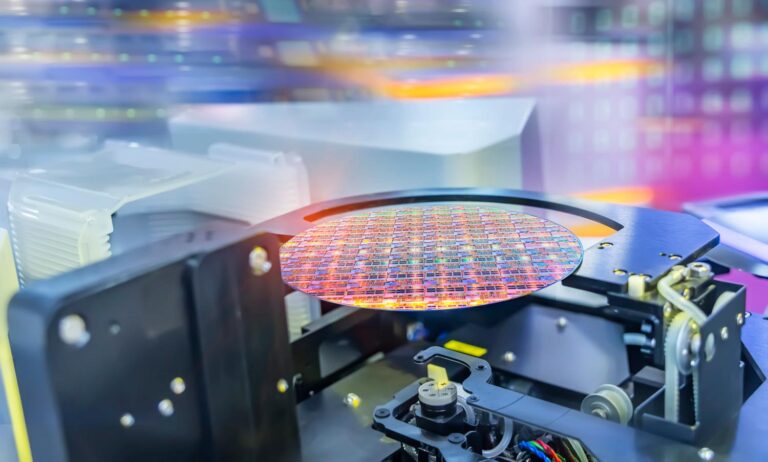
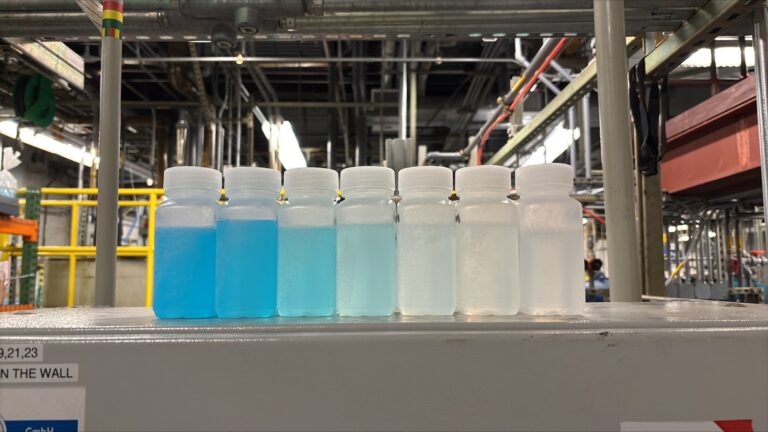
Lam was facing increasing volumes of metal wastewater from its semiconductor development operations. The wastewater was highly acidic, copper concentrations varied significantly and available space for additional treatment infrastructure was extremely limited.
The facility relied on trucking wastewater offsite, an approach that, while introducing rising costs and a potential constraint on production as tool utilization increased, was reliable and helped maintain compliance and continuous production.
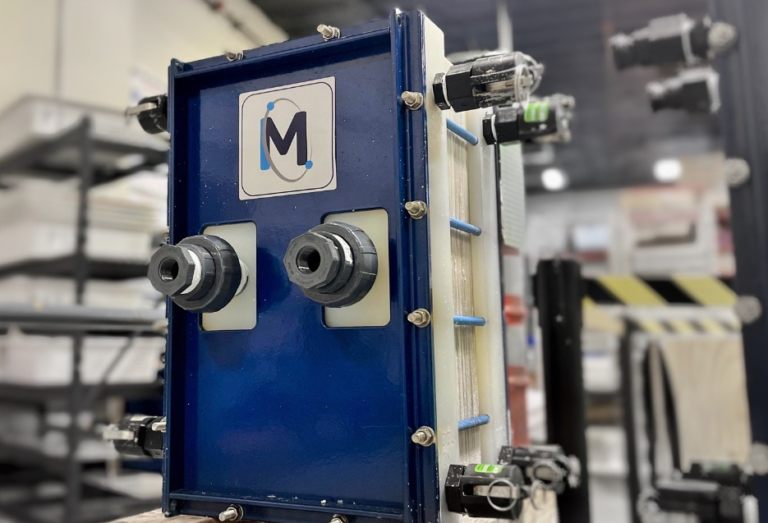
We knew our Electro-Ceramic Desalination (ECD) technology could address the challenging wastewater chemistry. The bigger question was how to implement a new treatment process within an active facility while minimizing operational disruption and financial risk.
Working with Lam Research, we developed a compact treatment solution that integrated with existing infrastructure. We also structured the engagement around a water-as-a-service model, avoiding a large upfront capital commitment while keeping Membrion responsible for ongoing system support and optimization.
The model gave us the flexibility to continue improving performance based on what we learned in actual operation. Working alongside Lam Research’s team, we refined operating procedures, controls and module designs to improve treatment efficiency and accommodate changing wastewater conditions.
Over time, these improvements increased daily treatment capacity by 3×. All the while, the system maintained 100% in-spec treatment and delivered 35% cost savings per gallon.
I’m proud of those results, but I think the process behind them is equally important. The innovation worked on day one, but there was still a lot of learning that we captured over 2.5 years of operation. The successful deployment depended on collaboration, continued optimization and a commercial structure that made adopting something new less risky for the customer.
Commercialization needs to be part of the design
One of the most useful observations in the WEF report is that successful implementation depends on several mechanisms working together. Demand, validation, procurement, financing and evidence all play a role in helping customers adopt new technology.
Too often, we treat these as challenges to address after the technology has been developed. I think they deserve consideration much earlier.
If a new treatment process requires substantial infrastructure changes, creates additional maintenance demands or doesn’t fit within a customer’s capital planning, those factors can prevent adoption regardless of how well the technology performs. Understanding how a solution will be purchased, installed, operated and supported needs to be part of the innovation process itself.
Of course, technology providers can’t overcome every barrier on their own. Customers who work with early-stage innovators need to provide opportunities for real-world validation and be willing to collaborate on implementation. Investors need to understand the timelines and resources required to commercialize industrial technologies—12 to 24 month sales cycles are not uncommon. And innovators need to remain engaged long enough to demonstrate sustained performance and build the operating histories that future customers will expect to see.
The WEF report makes a compelling case for greater collaboration across this ecosystem. Our experience suggests that the earlier these conversations happen, the better equipped everyone is to turn a promising technology into a practical solution.
The real measure of innovation
As water challenges become more complex, we need new approaches that can deliver better treatment performance with fewer resources and less operational burden. But we also need to think more broadly about what constitutes successful innovation.
Technical performance will always matter, and a successful pilot is an important step. The greater opportunity is translating those results into solutions that can operate reliably within real facilities, meet financial and operational expectations, and eventually be deployed at scale. Membrion is actively deploying commercial installation #5, with #6 through #10 not far behind, but getting #1 took a lot more collaboration.
The industry has invested tremendous effort in developing better ways to treat water. Now we need to apply that same ingenuity to making those solutions easier to adopt. After all, innovation can only deliver on its promise when we find ways to put it to work.
Stay connected
Join our mailing list to stay updated on future opportunities and company news.
Resources
Explore Membrion resources to gain insights on solving complex water challenges.
Treating concentrated copper wastewater without expanding the footprint
Semiconductor copper wastewater from electrodeposition tools can arrive at high…When everything is possible, what is valuable?
For decades it’s been technically possible to treat almost any…The real opportunity in resource recovery
Resource recovery doesn’t get adopted as a sustainability story. It…