Treating lithium rinse water in EV battery manufacturing
Managing lithium-containing rinse water is a growing challenge in EV battery manufacturing. This case study shows how one facility reduced hauling and enabled water reuse.
As EV battery manufacturing scales, managing wastewater streams containing lithium and other dissolved ions becomes increasingly important. Traditional approaches often rely on hauling and disposal, which can be costly and inefficient.
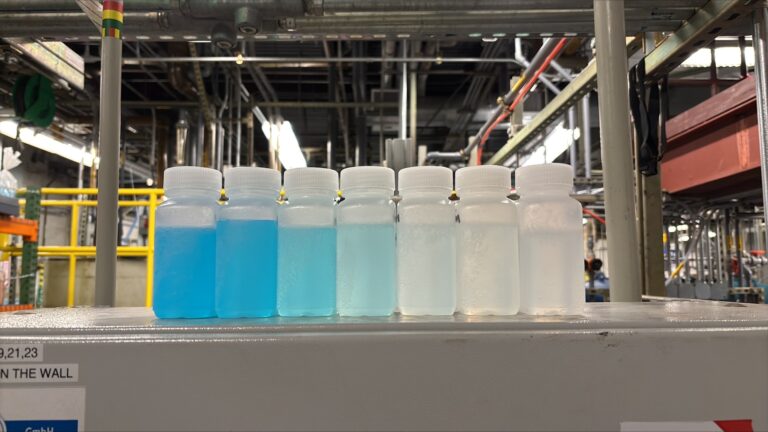
This case study explores how an EV battery manufacturer implemented ECD to treat lithium-containing rinse water. By removing dissolved ions and enabling water reuse, the facility reduced reliance on offsite disposal and improved overall process efficiency.
The implementation not only lowered operational costs but also supported more sustainable manufacturing practices. It highlights how ECD can be applied to emerging industrial challenges in battery production.
Stay connected
Join our mailing list to stay updated on future opportunities and company news.
Resources
Explore Membrion resources to gain insights on solving complex water challenges.
Treating concentrated copper wastewater without expanding the footprint
Semiconductor copper wastewater from electrodeposition tools can arrive at high…When everything is possible, what is valuable?
For decades it’s been technically possible to treat almost any…The real opportunity in resource recovery
Resource recovery doesn’t get adopted as a sustainability story. It…